ACHIEVEMENTS Yacmo's seismic isolation technology protects lifelines
base-isolating platform
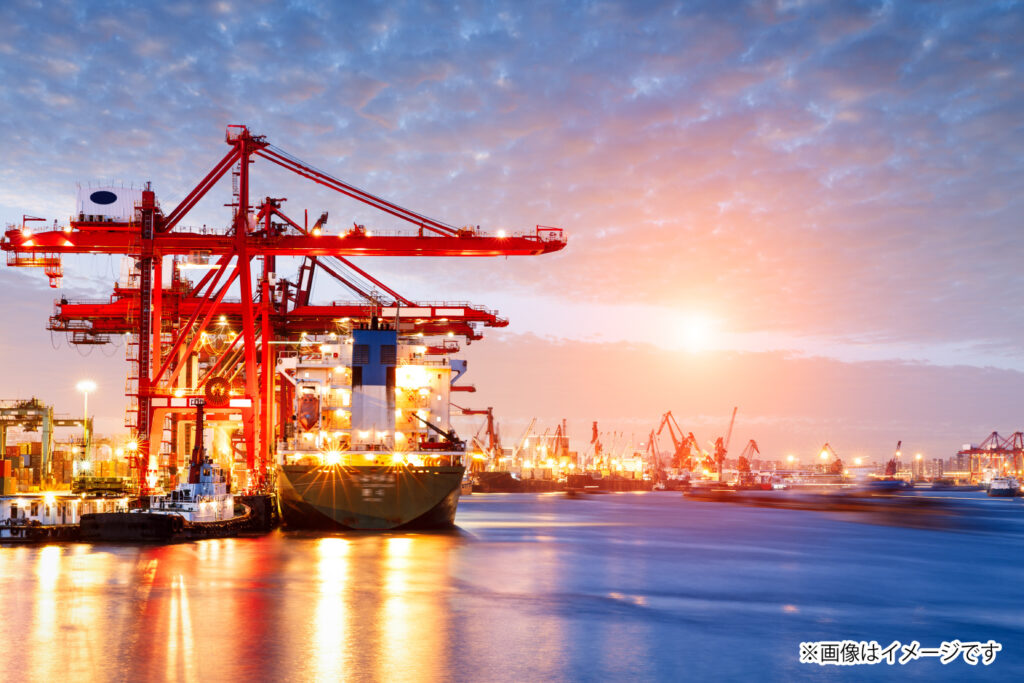
Ship unloaders unload grain and other cargo from ships. If it becomes unusable due to earthquake trouble, logistics will come to a halt. Yacmo's seismic isolators for unloaders protect people's lifelines in the event of a major earthquake.
The world of fashion is constantly changing, and it can be difficult to keep up. But there are a few key trends that have emerged in recent years. One of these trends is the increasing popularity of sustainable fashion. This means that more and more people are choosing to buy clothes that are made from eco-friendly materials and produced in an ethical way. Another trend is the rise of "athleisure." This is a style of clothing that blends athletic wear with everyday fashion, allowing people to be comfortable and stylish at the same time. Finally, we're seeing a growing interest in vintage and secondhand clothing. This trend is driven by a desire for unique pieces and a rejection of fast fashion. These are just a few of the many trends that are shaping the fashion industry today.
issue
Unloaders located along bay shores have often been severely damaged during major earthquakes such as the Great Hanshin-Awaji Earthquake and the Great East Japan Earthquake. When unloaders are damaged and become unusable, unloading of grain for food and livestock becomes impossible, causing major damage to lifelines in the surrounding areas.
Earthquake damage to unloaders is mainly caused by derailment from the rails and damage to the legs due to excessive loading, but seismic isolators are effective in countermeasures against these problems. Seismic isolators significantly reduce the seismic acceleration above the isolator, thereby reducing seismic damage. However, seismic isolators are subject to movement when the unloader is pushed by wind or other forces, so a mechanism is required to lock the isolators in place except during earthquakes. In summary, the following are required
- No derailment or damage to the legs caused by earthquakes (seismic isolation performance)
- Robust structure capable of withstanding loads of 400 tons or more (equipment strength)
- Unmovable in high winds (locking mechanism)
The world of fashion is constantly changing, and it can be difficult to keep up. But there are a few key trends that have emerged in recent years. One of these trends is the increasing popularity of sustainable fashion. This means that more and more people are choosing to buy clothes that are made from eco-friendly materials and produced in an ethical way. Another trend is the rise of "athleisure." This is a style of clothing that blends athletic wear with everyday fashion, allowing people to be comfortable and stylish at the same time. Finally, we're seeing a growing interest in vintage and secondhand clothing. This trend is driven by a desire for unique pieces and a rejection of fast fashion. These are just a few of the many trends that are shaping the fashion industry today.
counter-measure
The figure below shows a full view of the unloader with the seismic isolation device installed, as well as a photograph of the seismic isolation device itself, its structure and specifications.
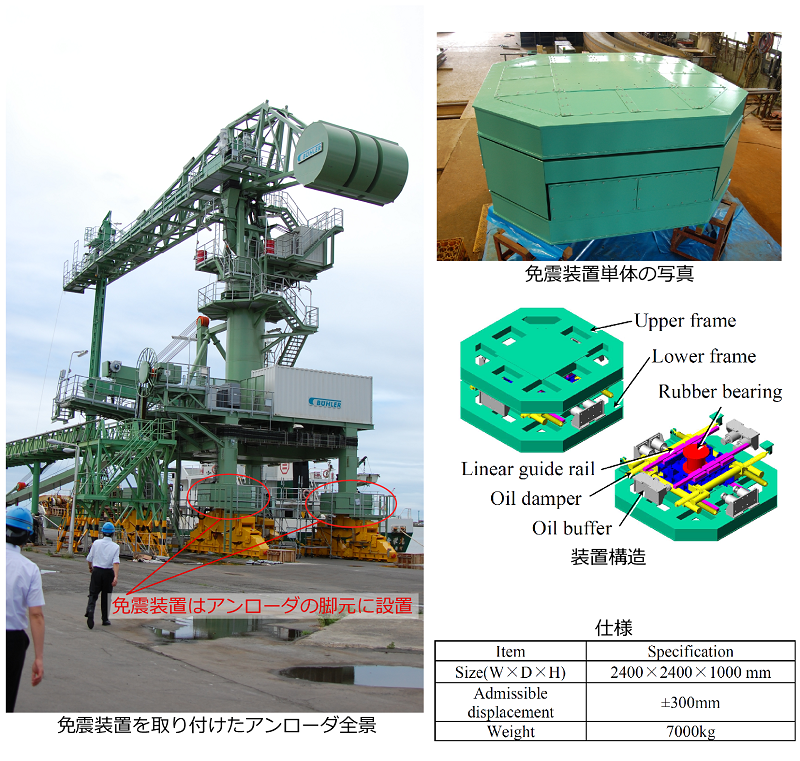
Locking mechanism: The oil damper in the seismic isolation system has a locking function and does not move until a certain force is applied. Therefore, the oil damper moves during earthquakes to perform its seismic isolation function, but it is difficult to move during strong winds.
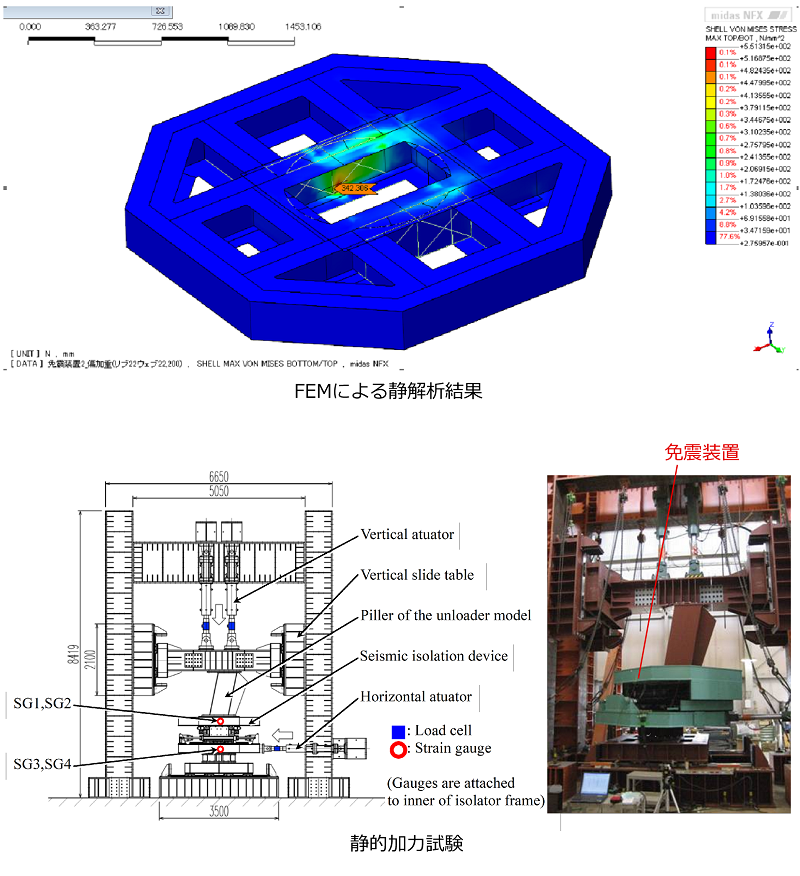
Regarding device strength: FEM analysis is used to confirm that the seismic isolation device is strong enough to support the load of the unloader. Furthermore, FEM analysis and full-scale force tests are conducted during the development of seismic isolation devices to confirm that the analytical results are consistent with the experimental results.
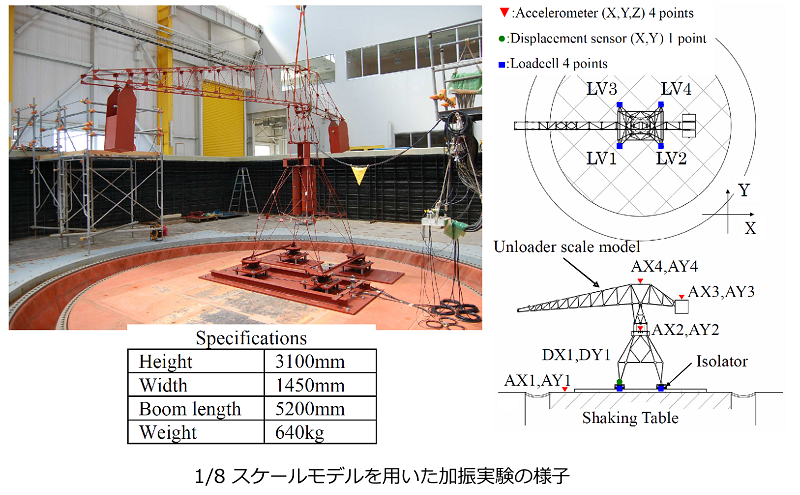
Seismic isolation performance: The seismic isolation performance has been confirmed to be sufficient by simulation in advance. Simulations are based on a method that was confirmed to fit well with vibration tests using a 1/8-scale model during development.
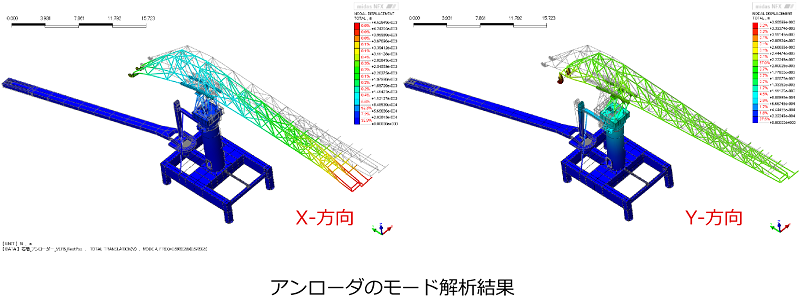
Since the unloader is a flexible structure, the study of the base isolation system must include the dynamic characteristics of the unloader. Therefore, modal parameters of the unloader are derived by FEM analysis, and a two-mass model is created by combining the modal parameters with the seismic isolation device, and simulations are performed. The analytical model created in this way is confirmed to fit well with the scale model during development. The figure below shows the results of a modal analysis of an unloader. This is the geometry in the idle state, but similar analyses were performed for several other states, including the state during unloading.
The world of fashion is constantly changing, and it can be difficult to keep up. But there are a few key trends that have emerged in recent years. One of these trends is the increasing popularity of sustainable fashion. This means that more and more people are choosing to buy clothes that are made from eco-friendly materials and produced in an ethical way. Another trend is the rise of "athleisure." This is a style of clothing that blends athletic wear with everyday fashion, allowing people to be comfortable and stylish at the same time. Finally, we're seeing a growing interest in vintage and secondhand clothing. This trend is driven by a desire for unique pieces and a rejection of fast fashion. These are just a few of the many trends that are shaping the fashion industry today.
result
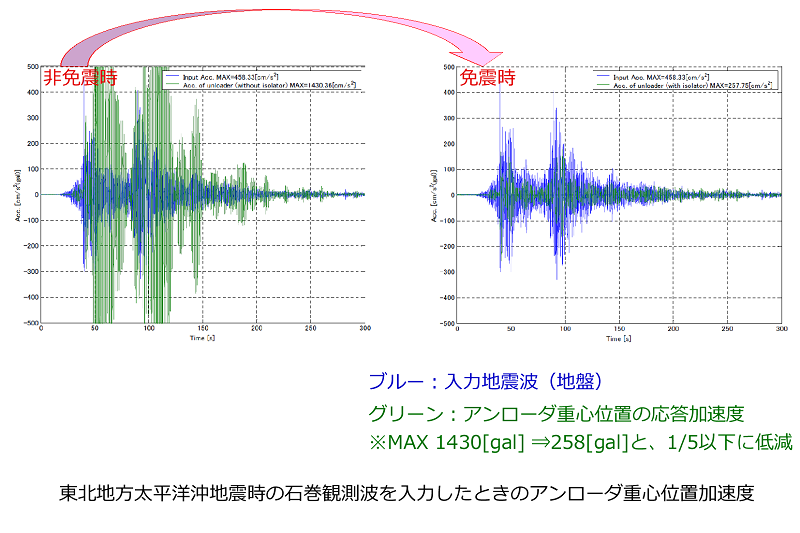
The seismic isolation effect during an earthquake is studied in advance by simulation. The figure below shows the simulation results when the seismic wave observed in Ishinomaki during the Tohoku Pacific Offshore Earthquake is input. It shows that the seismic isolation system reduces the acceleration at the center of gravity of the unloader to 1/5 or less.
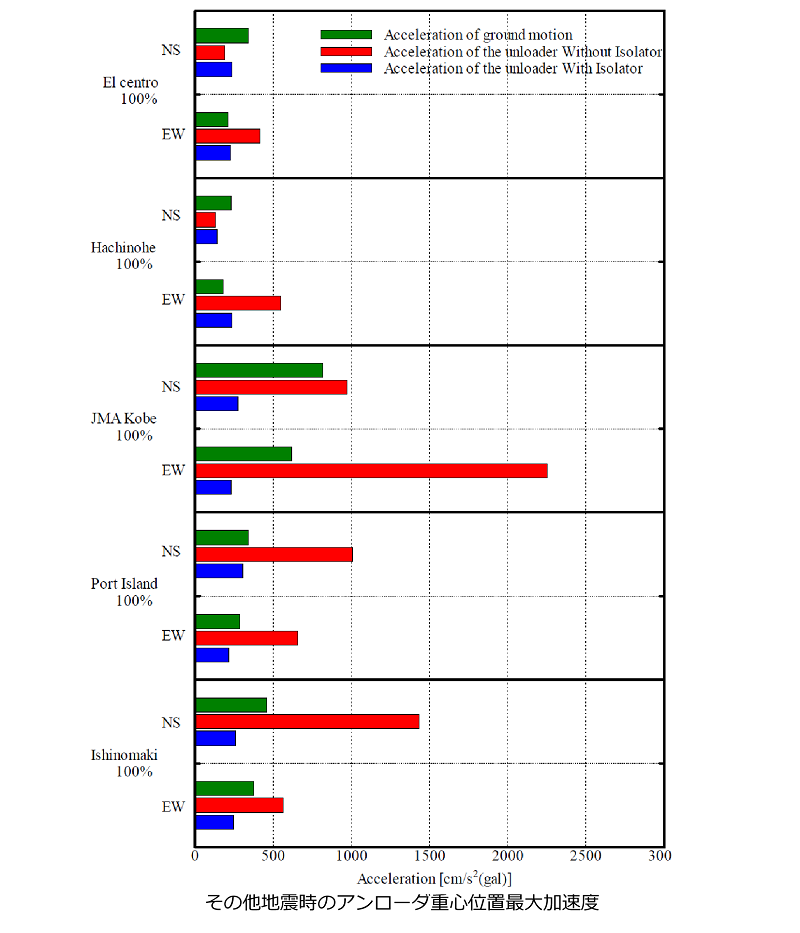
The maximum acceleration at the center of gravity of the unloader when various other seismic waveforms are input is shown in the figure below. The green graph shows the maximum seismic acceleration, the red graph shows the results without seismic isolators, and the blue graph shows the results with seismic isolators. Good results are shown for all earthquakes.
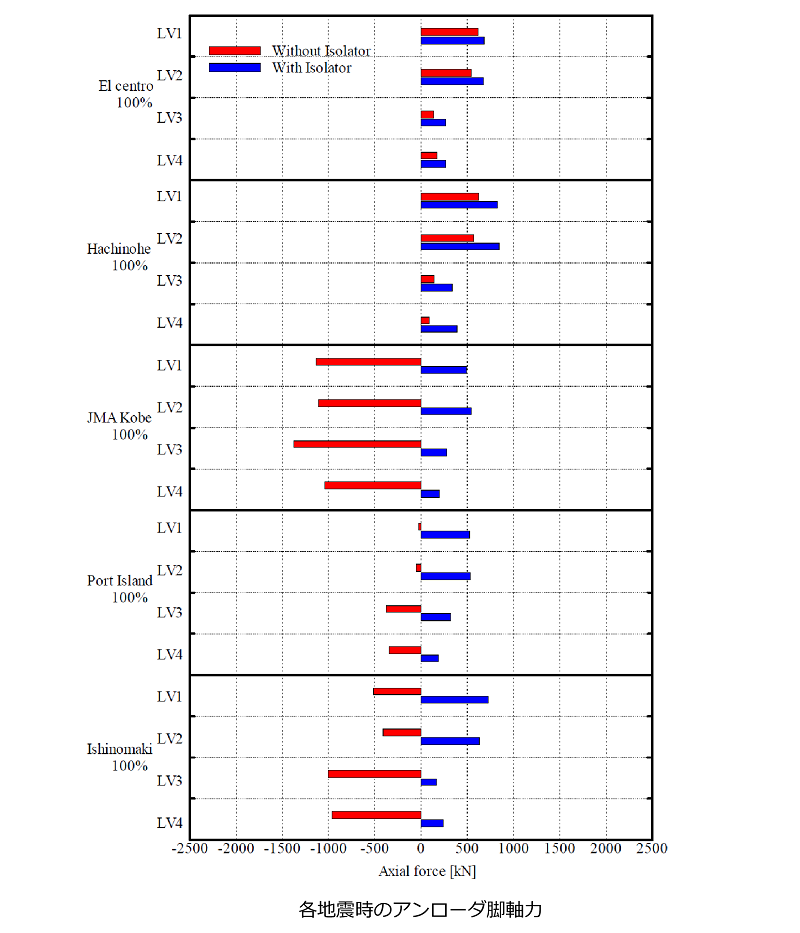
The leg axial forces of the unloader are also summarized in the same way. Red shows the case without seismic isolation device and blue shows the case with seismic isolation device. Negative values in the graph indicate that the legs have lifted off the rails; in the JMA Kobe wave, the Port Island wave, and the Tohoku earthquake wave, the forces that lift the legs are working in the absence of seismic isolation devices. In other words, it can be said that the possibility of derailment is very high. In all cases with seismic isolators, the force is in the positive direction on all legs, and the risk of derailment from the rails is very low.