
ACHIEVEMENTS Seismic Isolation Measures for Server Rooms | Case Study on Consideration of Seismic Isolation Device Specifications Through Seismic Response Analysis
consulting
Server Room Seismic Isolation Device Selection Case Study: Specification Review and Analysis Results for Upper Floors and Long-Period Ground Motion
When introducing seismic isolation devices, seismic response analysis will be conducted using seismic waves for consideration in order to confirm the seismic isolation effect against expected seismic motions in advance. Based on the analysis results, seismic isolation device specifications that satisfy the installation conditions and required performance will be examined and proposed.
Engineering Group, Division 1
Dai Yiqi
Challenges of Base Isolation in Server Rooms | The Difficulty of Long-Period Ground Motion in Upper Floors
In this case, there was a plan to install servers in a server room on the upper floor of a certain building. A seismic isolation device was considered, and a proposal for a product that met the required performance was requested.
We conducted a study targeting seismic motion data (Level 2 and Level 3 seismic motions) provided by the client. Due to the high levels and long periods of these seismic motions, it was anticipated that the response acceleration and response displacement during an earthquake would be large in the upper floors. Under these severe conditions, it was necessary to determine the seismic isolation devices and their specifications that would meet the required performance.
Comparison and Selection Process of Three Types of Seismic Isolation Devices
In this study, we evaluated the feasibility of countermeasures for multiple seismic isolation devices.
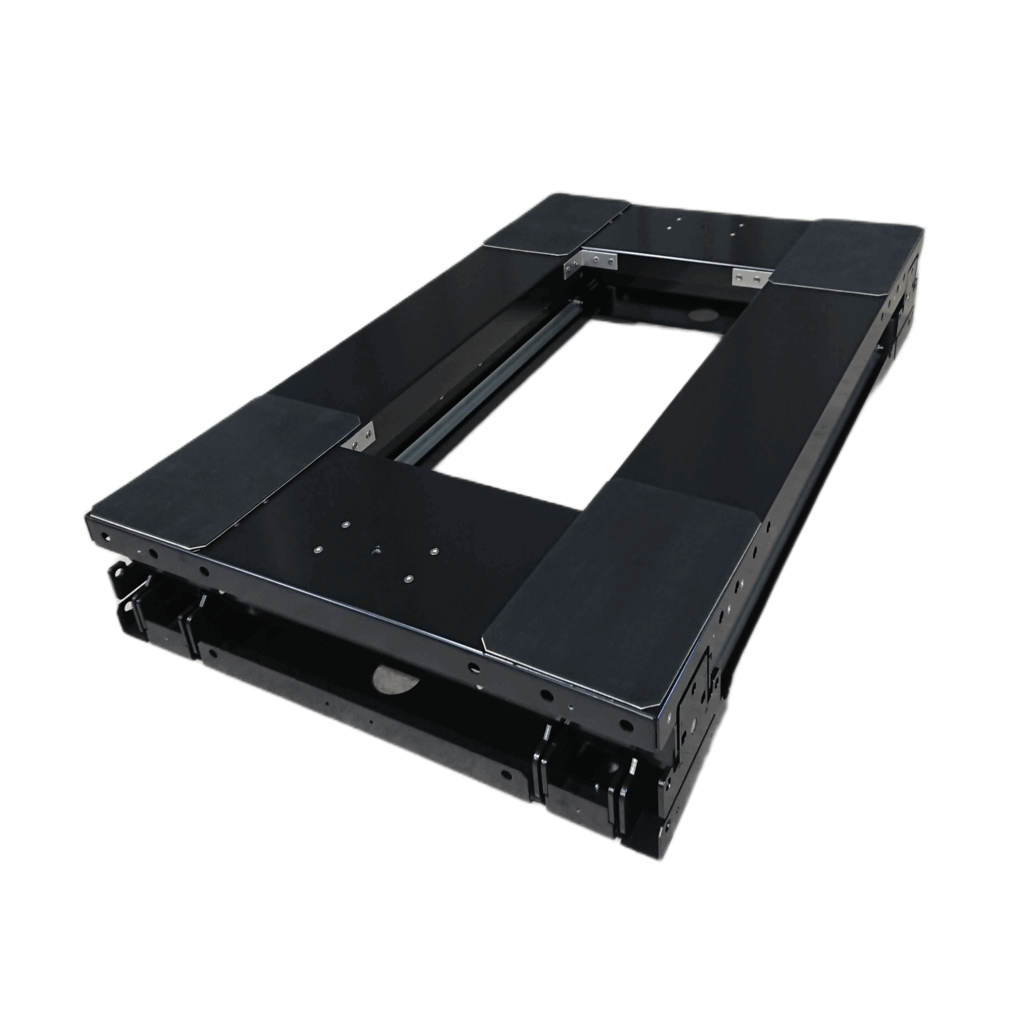
Server Utena (SU): Rejected due to resonance risk
First, regarding Server Utenna (SU), we determined that its application would be difficult due to the risk of resonance. The input earthquake motion has a period of approximately 5 seconds, while Server Utenna's natural period is approximately 6 seconds, which are close. This proximity raises concerns about an increase in response acceleration and response displacement (Figure 1).
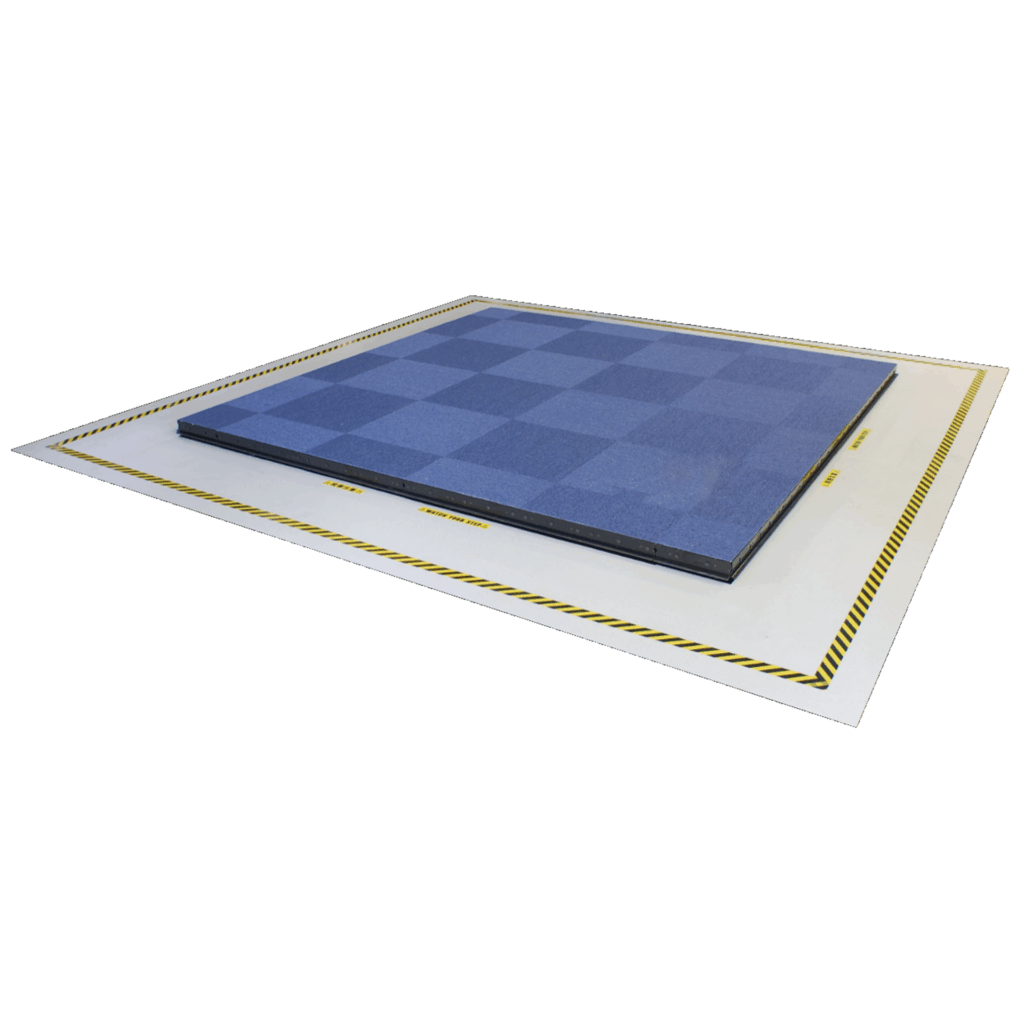
Floor Utena (FU): Not adopted in initial review
As a result of our review of the floor outrigger (FU), it was confirmed that seismic isolation is difficult to achieve with a stroke of ±390mm for Level 3 seismic motion, and sufficient seismic isolation effect cannot be obtained. Therefore, it does not meet the required performance, and we determined that its application is difficult (Figure 2).
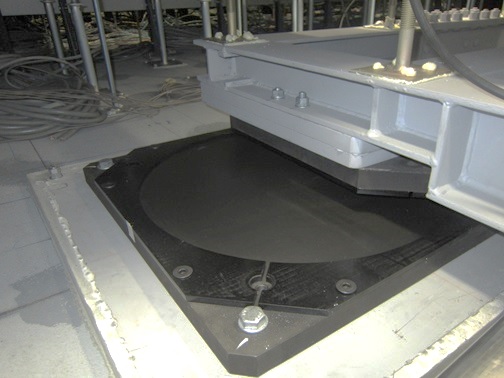
Adoption of Horizontal 2D Seismic Isolation Floor (NQ)
As a result of our investigation into the horizontal 2D base isolation floor (NQ), we have determined that it may meet the required performance because the damping and stroke can be adjusted (Figure 3).
Based on the above results, we have decided to conduct a detailed investigation targeting a horizontal two-dimensional seismic isolation floor.
Initial study conditions and analysis results
Consideration conditions
・Design seismic motion: Level 2, Level 3
・Output acceleration to equipment: 250 gal or less
・Damping: 25%, 35%
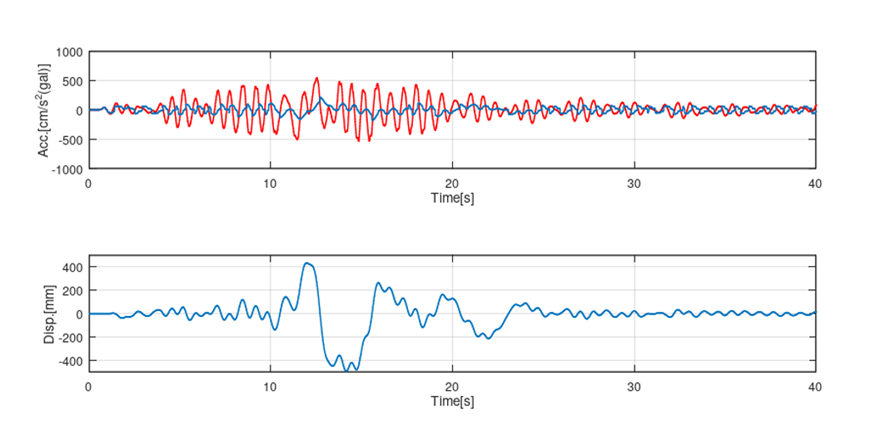
As an example of the review results, in the case of Level 3 seismic motion with the seismic isolation floor damping set to 35%, the maximum acceleration was reduced from approximately 560 gal to 220 gal, and the maximum displacement was approximately 490 mm (Figure 4).
As a result of our review, we proposed a horizontal two-dimensional seismic isolation floor with 35% damping and a stroke of ±500mm, which can provide countermeasures against many earthquake motions. However, we received feedback that the large range of motion is not feasible due to space constraints on the installation floor.
Therefore, after discussion with the client, it has been decided to reconsider under the following conditions.
Conditions for Reconsideration and Analysis Results
Consideration conditions
Considered earthquake motion: Level 2
・Output acceleration to equipment: 250 gal or less
Maximum displacement: 300mm or less
To meet these conditions, we re-examined the required damping performance.
As an example of the review results, at Level 2 seismic motion, when the damping of the seismic isolation floor was set to 55%, the maximum acceleration was reduced from 560 gal to approximately 230 gal, and the maximum displacement was approximately 290 mm (Figure 5).
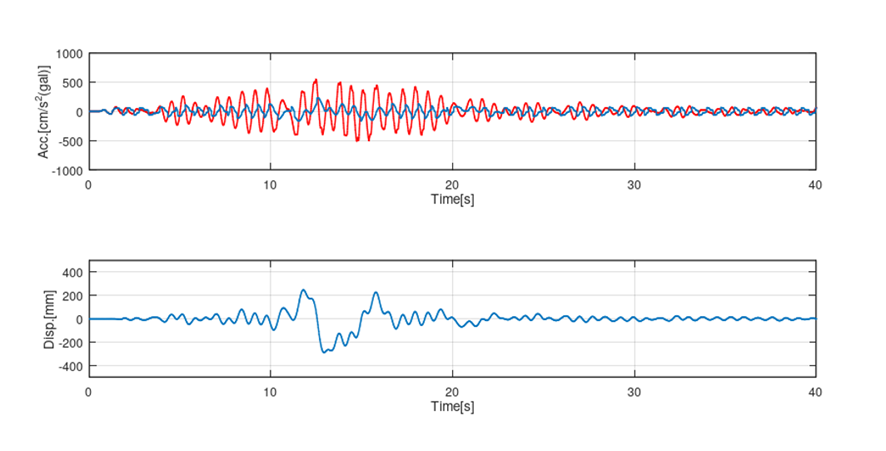
Additionally, due to changes in the evaluation criteria, "Floor Utena," which was initially excluded from the proposal, has become a subject for reconsideration.
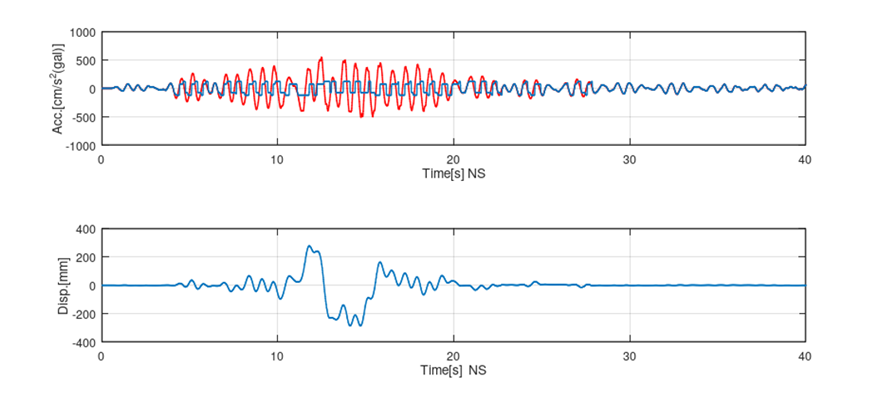
When the floor was investigated using the *floor-structure*, the maximum acceleration decreased from approximately 560 gal to 120 gal, and the maximum displacement was approximately 290 mm at Level 2 seismic motion (Figure 6).
summary
In this study, we confirmed the equipment specifications that meet the required performance for each study condition and proposed them to the customer. Additionally, due to changes in the study conditions, we were able to accommodate "Floor Utena" and propose it as a new option.
In this way, Yakumo can design seismic isolation devices that can suppress both acceleration and displacement while considering installation space constraints, and propose devices or specifications that meet the customer's performance requirements. If you have any concerns about seismic isolation, please feel free to contact us.
Related cases
OA floor with seismic isolation function! Ultra-thin seismic isolation floor ~Floor Utena
Example of seismic isolation measures for JMA supercomputer system